A Short History of Hakone: The Checkpoint, the 1805 Court Case, and the Corporate War That Still Shapes Your Trip
箱根の歴史 —— 関所・一夜湯治・箱根山戦争が、いまの箱根を決めている
“Ride the Seibu-affiliated Izuhakone Bus instead of the Odakyu network, and tour Hakone while feeling the old 'Hakone mountain war' between the two rail groups. That's its own kind of fun.”
One Japanese commenter, asked how to enjoy Hakone in the crowded 2020s, gives an answer that sounds like a history lecture: start and end at Atami, ride the Seibu-affiliated Izuhakone Bus instead of the Odakyu network, and tour the mountain "while feeling the old Hakone mountain war between the two rail groups" (70 likes). He is right, and he is also explaining the whole town. Almost every quirk a visitor runs into here — why your Free Pass abruptly stops working, why there is a ropeway at all, why locals soak for one night and go home, why a mountain village has a grand hotel built for foreign guests in 1878 — is a leftover from something that happened between 1618 and 1968. Here is the short version, with the modern receipts from Japanese comment sections attached.
Hakone is not an old town preserved under glass. It is five layers of infrastructure stacked on a live volcano, each one built for a different kind of traveler: Edo officials policing a road, Tokugawa-era daytrippers sneaking a bath, Meiji foreigners escaping the Yokohama summer, prewar rail engineers, and two postwar corporate empires that spent twenty years trying to bankrupt each other on this mountain. Every layer is still in service. That is why the practical advice in Japanese comment sections — board at Odawara, walk Gora Park downhill, take the bus nobody's pass covers — reads like a set of unrelated tricks until you know the dates.
1618: a road, a post town, and a checkpoint you could not walk around
Hakone's first job was surveillance. The post town of Hakone-juku was established on the Tokaido in 1618, and tradition holds that the cedar avenue along Lake Ashi was planted the same year on the shogunate's orders by Matsudaira Masatsuna — the surviving 500-meter stretch between Moto-Hakone and Onshi-Hakone Park still has trees over 350 years old, 30 to 40 meters tall. The following year, 1619, the shogunate put the Hakone checkpoint on the lakeshore, where it operated until 1869. Its reputation is summed up by the phrase "guns in, women out" — though in practice Hakone's specialty was the second half: inspecting women leaving Edo, while the Arai checkpoint watched for incoming guns. The reconstructed barrier you can walk through today is the reason this mountain became a place with a schedule.
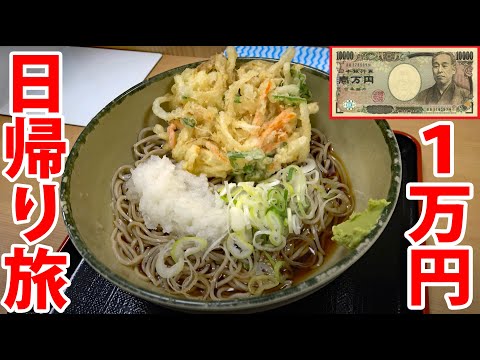
That geometry never went away. The Tokaido climbs from Odawara at the foot of the mountain, so Odawara has been Hakone's staging post for four hundred years — and Japanese travelers still treat it as one. "From Hakone-Yumoto the buses mean queuing and standing, so I board at Odawara as a matter of course. A little knowledge buys you comfort," one commenter writes. The most-liked food tip under an entire Hakone day-trip video (272 likes) is not a lake-view restaurant either — it is Hakone Soba, the station soba counter at Odawara, endorsed by a former employee who says it beats "some overpriced soba restaurant" and that you should ask for your kakiage fried fresh. Four centuries on, the gateway town is still where the useful things are.
738 and 1805: how Hakone invented the one-night soak
The spring at Hakone-Yumoto is traditionally dated to 738, opened by the monk Jojobo, a disciple of Taicho, in prayer against a smallpox epidemic. By the Edo period the mountain had a brand: the Hakone Nanayu, the Seven Hot Springs — Yumoto, Tonosawa, Dogashima, Miyanoshita, Sokokura, Kiga and Ashinoyu. What made Hakone different from every other spa in Japan was not the water. It was the location: a few hundred meters off the Tokaido, two days' walk from Edo. A cure-stay, toji, normally meant weeks of treatment. Hakone was close enough to steal for a single night.
The town's defining moment is a lawsuit. In 1805 the post towns of Odawara and Hakone complained to the road magistrate that Yumoto was lodging groups under the name "one-night toji" and draining their guests. Yumoto's answer was that touring several of the seven springs was the real cure. The magistrate ruled that one-night toji was permissible — and with that, the short leisure soak was effectively legalized, and the modern Japanese onsen trip was born on this mountain. Read the comment sections now and the pattern is unchanged, right down to the vocabulary: the quiet bath a 30-year regular of famous Tenzan escapes to is named kayoi-toji — "commuting toji" — Edo spa language still on a signboard. "So Ichikyu is out of the bag… I'd rather it had stayed unknown. And Tenzan has sadly become a bath full of overseas visitors. I've been going for about 30 years now," he writes (26 likes). Another regular explains the appeal in one line: "The families and tourists all flow to famous Tenzan, so it's quiet solo onsen-lovers. That's the best part" (37 likes).
- The quiet onsen where Kanagawa locals actually soak195 comments — a dozen springs named in the replies
- Onsen in Japan, judged by Japanese bathersthe nationwide pillar guide
1878: Hakone was built for foreign guests, on purpose
The Fujiya Hotel opened at Miyanoshita on 15 July 1878 as Japan's first full-scale resort hotel, and it was aimed squarely at foreigners. Its founder, Yamaguchi Sennosuke, sailed to the United States at twenty, came home to enroll at Keio, and was told by Fukuzawa Yukichi that international tourism was worth building a life on. He chose Miyanoshita on three criteria: foreign residents already dreamed of Hakone and Mount Fuji, it was close to Tokyo and Yokohama, and it had hot water. For a stretch of its early history the hotel served overseas guests exclusively; Helen Keller and Charlie Chaplin are on the guest list.
This is the layer worth holding in mind when you read the sharpest Japanese comments about Hakone today. Under a crowd-test video, a former Hakone route-bus driver describes being worked into medical leave by congestion and returning only on the condition that he never drive Hakone again (319 likes). "Hakone is just overflowing with foreign tourists now — I've stopped going" (172 likes). A resident who works there: "Foreigners at every bus stop, in every convenience store — even the convenience-store staff are foreign now. I've started feeling like I'm the one visiting another country" (153 likes). The friction is real and it is about volume and transport, not about the fact of foreign visitors: this resort was constructed for exactly that market 148 years ago. And the affection runs the other way too — the most-liked "go here instead" comment in that thread is a local going to the foreigner-built hotel on purpose: "I love the food at the Fujiya Hotel. It's too expensive for me to actually stay, but I go to Hakone just to have breakfast or lunch there. Then tea at the Yama no Hotel on the way home — that's my idea of bliss" (102 likes).
1919: the mountain railway that turned a pass into a loop
Hakone's climb up the mountain took thirty years of engineering. A horse-drawn tramway ran Kozu to Yumoto from 1888; electric service followed in 1900; and on 1 June 1919 the Hakone Tozan line opened between Hakone-Yumoto and Gora — 8.9 km, gradients up to 80 per mille, three switchbacks at Deyama, Ohiradai and Kami-Ohiradai. The cable car above Gora opened in 1921. That is the moment Hakone stopped being a road you crossed and became a circuit you ride. The following February, four universities ran the first Tokyo–Hakone round-trip ekiden, a race conceived by the marathoner Kanaguri Shizo; it now runs every 2 and 3 January from Otemachi to Lake Ashi over 217.1 km, which is a polite way of saying that if you visit on those two days, the mountain road is the event.
The loop is also why Japanese commenters insist the trains-and-feet version of Hakone beats driving: "Touring Hakone by train, bus, ropeway and your own two feet gives you overwhelmingly more" (60 likes). The century-old gradient explains the single best walking tip in the thread, too — Gora Park is built on the same slope as the cable car, so "get off at Koen-Kami station, stroll down through the park, and walk out at Koen-Shimo or Gora" (25 likes), rather than climbing it. Budget for the weather the engineers had to design around: "Every single time I go to Hakone, the ropeway is in fog," one commenter sighs; another spent thirty minutes stopped mid-air and now calls it a fine memory.
Until 1968: the Hakone Mountain War, and why your pass suddenly stops working
For more than two decades after the war, this mountain was a battlefield between Tsutsumi Yasujiro's Seibu group and the Odakyu and Tokyu groups, a transport-share fight that ran until a settlement on 2 December 1968. The trigger was the loop itself: Goto Keita wanted to circle Hakone by train, cable car, bus and boat, but Seibu's Suzu Railway — today's Izuhakone Railway — held the bus road from Kowakidani through Sounzan and Owakudani to Kojiri and would not let him through. So his side went over it: the Hakone Ropeway was built and opened in stages across 1959 and 1960. Tsutsumi retaliated by buying up land to strangle the Hakone Turnpike's extension to Mishima. In July 1964 the Odakyu side put a pirate ship on Lake Ashi — the 650-passenger Pioneer — and the cruise-passenger split reportedly flipped from about 3:7 against them to better than 6:4. The whole affair was public enough that Shishi Bunroku serialized a novel about it, Hakone-yama, in the Asahi Shimbun from March to October 1961, and Kawashima Yuzo filmed it for Toho in 1962.
So: the ropeway exists because a rival blocked a bus route, and the pirate ships are a marketing weapon from 1964. The truce line is still drawn across your ticket. The Hakone Free Pass covers the Odakyu-group set — the Tozan train, the cable car, the ropeway, the pirate ships, Hakone Tozan buses in designated zones and the run out from Odawara — and does not cover the Izuhakone Bus, the Lake Ashi cruise boats or the Jukkoku-toge cable car (those last two now run under the Fujikyu group). Japanese travelers have turned that into the best crowd hack on the mountain: "The Seibu-side services — Izuhakone Bus, the Komagatake and Jukkoku-toge lifts, the Lake Ashi cruise boats, Hakone-en — don't take the Odakyu Free Pass, so they're wonderfully empty! You'll even get a seat on the bus" (22 likes). Another commenter's crowd-dodging plan is the same idea in reverse — skip the Golden Course entirely, take the Komagatake Ropeway or a bus from Odawara, and "it's astonishingly empty" (37 likes). Pass coverage does get revised, so check the current terms before you buy.
- What the Free Pass actually covers, per Japanese ridersincluding the child-fare quirk locals find baffling
- The Golden Route, judged by Japanese travelerswhere Hakone sits in the standard itinerary
2015: the volcano still has the last word
Everything above sits on an active volcano, and it periodically reminds the town who is in charge. In June 2015 Owakudani produced the first eruption in the observation record for Hakone; the nature trail had already closed that May and stayed shut for roughly seven years. Since 28 March 2022 the 700-meter loop through the steam field has reopened as escorted, reservation-only entry — four departures a day, thirty people each, helmets, a safety cooperation fee, and cancellation whenever the weather or the volcano says so. The commenter who explained this rates it highly: "The explanations are genuinely worth it — pyroclastic flow traces, the boulder that shielded the Kuro-tamago hall from rockfall," and he sends people to the town's Hakone Geo Museum as well. The same geology is why the mountain has water hot enough to boil eggs black, and why the lore is older than any of the railways: "I heard that eating one of the hot-spring eggs adds seven years to your life, so I split mine with the grandma and grandpa who came along with me" (349 likes). The 2020s footnote, also from the comments: they come in packs, not singles.
What four hundred years of Hakone tells you to do
Five rules fall out of the history, and every one of them is independently confirmed by a Japanese comment section. One: enter from Odawara — the Tokaido's staging post is still where you get a seat on the bus and the best cheap meal. Two: plan a one-night soak or a day circuit rather than a grand tour, because that is the pattern Hakone legalized in 1805 and the one locals still keep. Three: if you want space, use the losing side of the 1968 truce — Izuhakone buses, an Atami start, the Seibu-side attractions — and check what your pass covers before you pay for it. Four: ride the loop downhill where the gradient allows, and treat fog and stopped ropeways as part of the deal. Five: reserve the Owakudani trail in advance and check the volcano, because it is the one operator on this mountain that has never negotiated.
Dates and operating details here are checked against public records and operators as of publication, and they change — verify fares, coverage and reservations before you travel. Every quoted number is a real like-count from a Japanese YouTube comment section, translated and aggregated by Locals Japan. We don't invent the local verdict; we carry it across with the receipts attached.
More from Japan
- #Atami
 5,427 likesFood & RestaurantsYouTube
Atami Street Food, Honestly Judged: Skip the Abalone Skewers and the Negitoro Cone — Locals Back the Pudding and the 150-Yen Manju
Under an honest walk-through of Atami's shopping streets — 5.1 million views, 1,130 comments — Japanese commenters sort the seaside resort's famous snack strip into clear winners and losers. The losers are, awkwardly, the seafood: the Instagram-famous negitoro tuna soft-serve cone gets dissected as "hell" once the tuna runs out and you're left eating plain rice from a cone (5,427 likes), and three separate commenters agree the abalone skewers are an overhyped letdown. One deadpan reply nails the whole thread: "It's supposed to be a seafood town, and not one seafood item got praised." The winners are the humble ones — Atami Pudding ("locals actually eat it too"), the fishcake sticks at Maruten, a fresh-baked 150-yen onsen manju — plus a queue-skipping branch trick for the pudding that only a regular would know.
1130 comments - #HakoneGuideHotels & Onsen
Onsen, According to Japanese Onsen People: Where They Soak, How They Book, and What They Skip
Most onsen guides are written by visitors who went once. This one is aggregated from the people who go monthly: Japanese comment sections where regulars name the baths they actually use, correct the listicles, flag what's closed, and hand over their booking tricks — every number below is a real like-count from a translated Japanese comment.
- #Hakone
 40 likesHotels & OnsenYouTube
Hakone's Famous Bath Is "All Overseas Visitors Now": The Quiet Onsen Where Kanagawa Locals Actually Soak
A 30-year regular of Tenzan — Hakone's most famous day-bath — says it has "sadly become a bath full of overseas visitors," and he isn't thrilled the video outed his refuge either. Under a roundup of Kanagawa's minor onsen, locals mapped the circuit they actually use: they named more than a dozen additional springs in the comments (plus two closures worth knowing), from Tanzawa-fed baths with "superb water" (31 likes) to a pH-10 mountain bathhouse best on a drizzly weekday. The spot they guard hardest sits right next door to Tenzan itself — a baths-only annex where, as one 37-like comment puts it, the families and tourists all flow to the famous place and leave the quiet to solo onsen-lovers.
195 comments - #Hakone
 272 likesTravel Tips & HonneYouTube
Hakone Free Pass Day Trip: Japanese Riders' Route Tricks — Board at Odawara, Walk Gora Park Downhill, and Trust the Station Soba
Under a Japanese rail YouTuber's ¥10,000 Hakone Free Pass day trip, the most-liked food tip (272 likes) isn't black eggs or a lake-view restaurant — it's Hakone Soba, the humble station soba chain, endorsed by a former staffer who says it beats "overpriced soba restaurants" and shares the trick of asking for your kakiage fried fresh. The rest of the comments read like a locals' operating manual for the classic loop: board buses at Odawara instead of Hakone-Yumoto if you want a seat, walk Gora Park top-to-bottom rather than climbing it, and expect the ropeway to be in fog more often than not. And a few quiet regulars would steer you somewhere calmer instead.
283 comments